





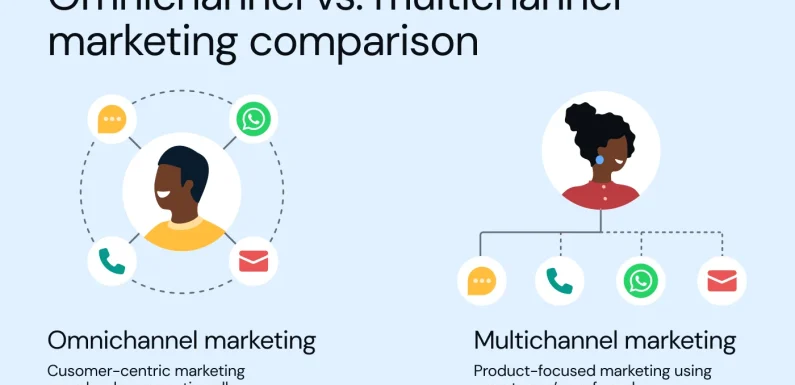
Let’s be honest. The line between shopping online and in-store isn’t just blurring—it’s practically vanished. Customers don’t think in channels. They think in moments. A quick browse on the phone during a commute, a weekend trip to touch and feel products, a follow-up purchase from the laptop at home. The real challenge, then, isn’t just having a presence everywhere. It’s telling one, seamless story across all of it.
That’s the omnichannel narrative. It’s the cohesive thread—the voice, the vibe, the value—that binds your digital app, your social media, your physical store, and your customer service into a single, understandable experience. Without it, you’re just a collection of disconnected touchpoints. With it, you build a world customers want to step into, again and again.
Why Your Story Matters More Than Your Inventory
Think of your favorite book or show. What pulls you in? Consistent characters, a believable world, a plot that makes sense from chapter to chapter. Now imagine if every episode was directed by a different person with no script meeting. Jarring, right? That’s exactly how a customer feels when your Instagram promises curated, sustainable luxury, but your in-store experience is a cluttered bargain bin with unhelpful staff.
The pain point here is dissonance. And in today’s retail landscape, dissonance is a conversion killer. A cohesive narrative solves for that. It aligns every team—marketing, sales, web, store design—around a central idea. This isn’t fluffy branding talk. It’s practical strategy. It reduces customer confusion, builds trust, and frankly, makes your marketing dollars work harder because you’re singing the same song, just in different keys.
The Pillars of Your Omnichannel Story
So, how do you build this? It starts with foundational pillars. You know, the non-negotiables.
- A Unified Customer Profile: This is the backbone. Can your systems recognize that the person who abandoned a cart online is the same one now walking into your store? Tools like a shared CRM are crucial for this single customer view.
- Consistent Voice & Visual Language: From your email subject lines to the signage in your fitting rooms, the tone and aesthetics should be unmistakably you. Are you witty and irreverent? Warm and expert? Pick a lane and drive in it everywhere.
- Fluid Data & Logistics: The narrative breaks down instantly if the promise doesn’t match reality. Real-time inventory visibility, buy-online-pickup-in-store (BOPIS), and easy returns are the unsung heroes of plot continuity.
Weaving the Narrative: From Digital to Physical and Back
Alright, pillars are set. Now for the weaving—the actual craft of connecting your hybrid retail experiences.
Start with discovery. Maybe a customer finds you through a targeted social ad (driven by that unified profile). The ad leads to a product page with rich, story-driven copy and videos. That’s chapter one. Chapter two? They use your “Reserve in Store” feature, which sends a personalized notification to a store associate’s device. When the customer arrives, the associate is already prepped—”Ah, I see you were looking at the ceramic coffee dripper. Let me show you our new locally-roasted beans that pair perfectly with it.”
See the flow? The digital handoff to physical isn’t a clunky transaction; it’s a guided next step in the story. The in-store experience, then, should offer depth you can’t get online. QR codes on shelf tags that link to detailed sourcing stories or tutorial videos. In-store events that are promoted digitally but experienced physically. It’s about using each channel for what it does best.
| Channel | Narrative Role | Example Touchpoint |
| Social Media | Teaser & Community | Behind-the-scenes Reels, user-generated content features. |
| Website/App | Deep Dive & Transaction | Interactive product configurators, detailed “Our Story” pages. |
| Physical Store | Immersion & Validation | Sensory product testing, expert-led workshops, tactile materials. |
| Email/SMS | Personalized Sequel | Post-purchase care tips, invites to exclusive in-store events. |
Embracing the Quirks & The Human Touch
Here’s where a lot of strategies get… robotic. A narrative isn’t a rigid script. It’s a framework for human connection. Allow for spontaneity. Train your staff not just on process, but on the why behind your brand so they can adapt the story in real conversations. Maybe that means letting a store associate handwrite a thank-you note that references something the customer chatted about. That note is a physical artifact of a digital-physical relationship. Powerful stuff.
And don’t fear a little friction if it adds value. Sure, a one-click purchase is great for commodity items. But for many hybrid retail experiences, the journey is part of the product. The research, the consultation, the “aha” moment in-store—these are narrative beats. Don’t automate them away. Curate them.
The Never-Ending Story: Iteration & Listening
A static story gets stale. Your omnichannel narrative has to be a living thing. This means creating closed-loop feedback systems. Actively solicit reviews not just on the product, but on the experience. Did the online promise match the in-store reality? Use in-store tablets for quick feedback. Monitor social sentiment. Listen to the questions your customer service team gets repeatedly—that’s where your narrative has a plot hole.
Then, iterate. Maybe you find customers are using your app in-store primarily to check competitor prices. That’s a signal. Perhaps your narrative needs to pivot harder on exclusive in-store benefits or expert knowledge they can’t get elsewhere. The data tells you where the story is lagging, and your creativity fills in the blanks.
Developing a cohesive omnichannel narrative isn’t a one-time project. It’s the core discipline of modern retail. It asks you to be part storyteller, part technologist, and wholly customer-obsessed. It turns a series of transactions into a continuing relationship. And in a world of infinite choice, that relationship—that well-told, consistently felt story—is what ultimately builds not just a sale, but a legacy.
